Fall checklist
- Disconnect hoses from outdoor faucets and shut off and drain any interior valve feeding them. Frost-free hose bibs can still split if a hose is left attached.
- Blow out the sprinkler system and drain the backflow device. If you're on a secondary (outdoor) water system, follow your provider's shutoff date.
- Shut off and drain the evaporative (swamp) cooler supply line, and cover the cooler, on homes that still use one.
- Insulate exposed pipes in crawl spaces, garages, unheated basements and under kitchen sinks on exterior walls.
- Close crawl space vents and seal gaps where cold air reaches plumbing.
- Find your main shutoff and make sure it turns. Exercise it twice a year.
- Clean gutters so meltwater can drain and ice dams are less likely.
- Keep the meter lid on. Utilities warn that frost reaching an uncovered meter box can freeze pipes on both sides of the meter.
During a cold snap
- Keep the thermostat steady day and night, at least in the mid-50s °F even when you're away.
- Open cabinet doors under sinks on exterior walls.
- Let a faucet fed by an exterior-wall pipe drip slowly.
- Keep the garage door closed if water lines, a water heater or a softener are inside.
Leaving for a ski trip or the holidays?
- Leave the heat on and ask someone to check the house.
- Consider shutting off the main water valve and draining lines if you'll be gone a while.
- Leak sensors or an automatic shutoff valve can alert you or stop a leak while you're away.
Ice dams
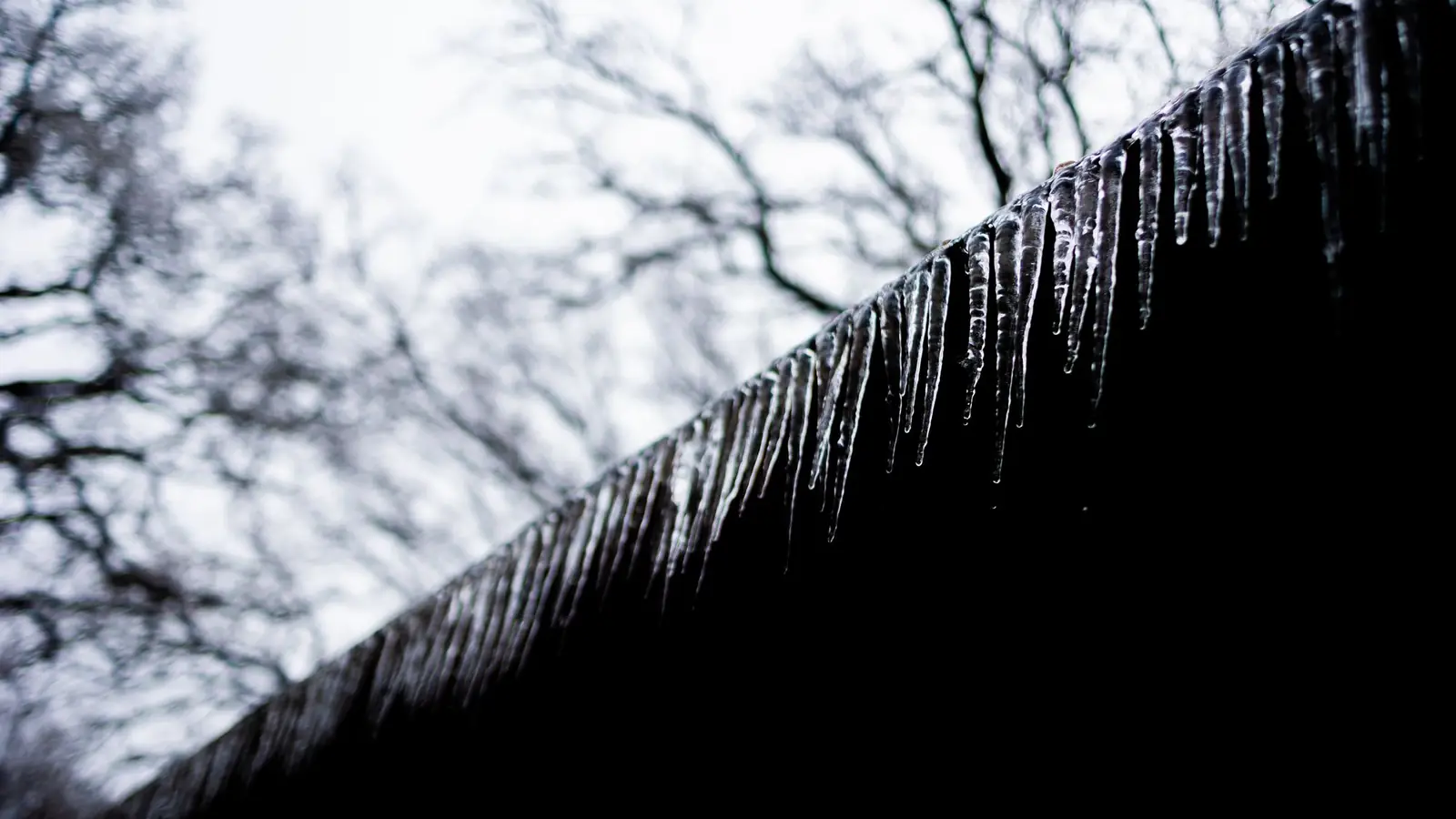
Snow on a warm roof melts, runs down and refreezes at the cold eaves, building a ridge of ice that backs water under shingles. Signs include heavy icicles and ceiling stains near exterior walls. Better attic insulation and ventilation are the long-term fixes; a roofer can safely remove dangerous ice.
If a pipe bursts anyway
Shut off the main, open faucets, turn off power to wet areas if safe, and call. See frozen and burst pipes or call (866) 405-0175 to reach an independent restoration provider.
Questions
What temperature should I keep the house at while away?
Many utilities and insurers suggest keeping the heat at least in the mid-50s °F. Rooms with plumbing on exterior walls may need more.
Do I need to blow out my sprinklers?
Yes. In Salt Lake County winters it's the standard way to keep sprinkler lines, valves and the backflow device from freezing and cracking.
Are frost-free hose bibs safe in winter?
Only with the hose disconnected. A connected hose traps water in the valve body, which can freeze and split it inside the wall.
Sources are linked in the text. This guide is general information, not engineering, insurance or legal advice. Last reviewed November 11, 2026.